The Book of Romans offers one of Scripture’s clearest explanations of the gospel, salvation, and the Christian life. The commentaries below can help readers understand Paul’s argument, major themes, and theological depth.
10 Best Romans Commentaries
The recommendations below rank 10 commentaries on Romans based on aggregate reviews. They include options for pastors, teachers, students, and lay readers, ranging from accessible mid-level works to more technical resources.
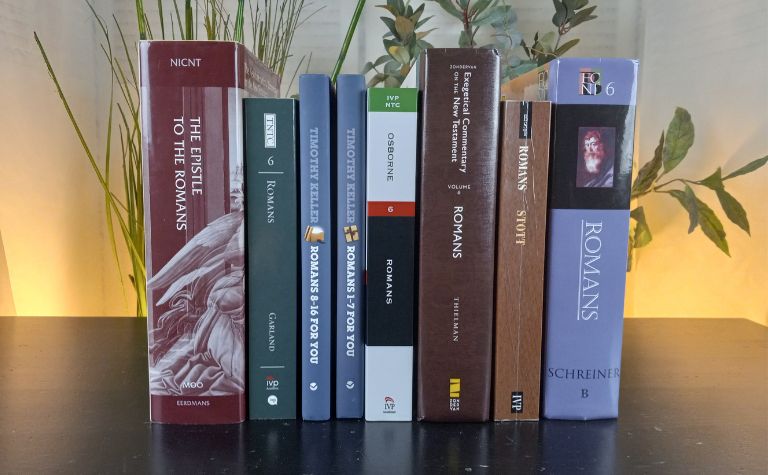
1. The Epistle to the Romans by Douglas Moo (NICNT)
Douglas Moo is a prominent biblical scholar and theologian. He is known for his conservative approach to biblical interpretation and is highly regarded within the evangelical community.
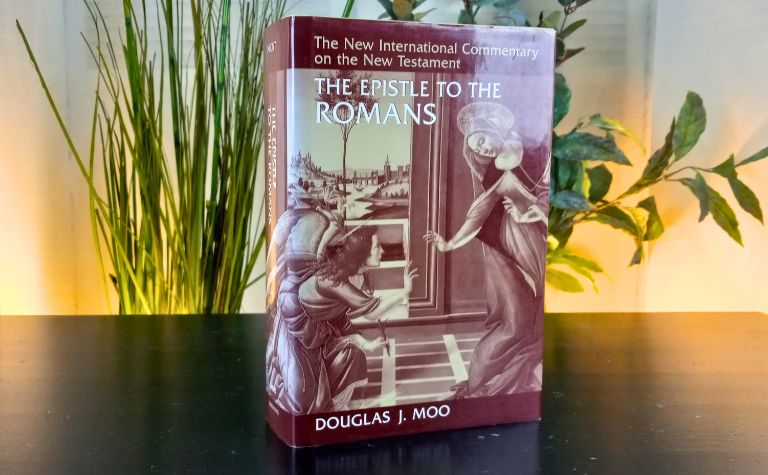
Moo’s commentary is theologically conservative
Having been in print for approximately 25 years, Moo’s Romans commentary in the NICNT series is the top choice for pastors, based on accumulated reviews.
One academic journal says, “This is a monumental work that can be placed among the best commentaries on Romans. If one wants to know the content of Romans, this commentary needs to be consulted. This work will be helpful to teachers, pastors, and students of God’s Word” (Biblioteca Sacra).
D.A. Carson calls it “the best Romans commentary for pastors available in English.” Keith Mathison of Ligonier Ministries ranks it #1, saying, “in terms of intermediate-advanced level commentaries, this one is the best place to begin.”
This is an advanced, mid-level commentary (i.e., not introductory). Those who aren’t academics or pastors may want to consider Moo’s Romans volume in the NIVAC series, which focuses on application (see below).
2. Romans by Thomas Schreiner (BECNT)
Thomas R. Schreiner is a well-known biblical scholar and theologian. He specializes in New Testament studies and has made significant contributions to the field.

Many pastors find Schreiner’s commentary helpful
Carson and Desiring God ministries (John Piper) place Schreiner’s volume in the top tier of commentaries on Romans. It’s well-reviewed for its exegesis and interpretation of the epistle.
Schreiner is known for his expertise in Pauline theology, particularly in justification, the role of law in Paul’s writings, and the doctrine of salvation. He argues against The New Perspective on Paul.
This is a mid-level commentary. It’s ideal for pastors with some knowledge of Greek, though it’s not technical.
3. Romans by Frank Thielman (ZECNT)
Frank Thielman is a distinguished biblical scholar and theologian known for his contributions to New Testament studies.

Thielman combines exegesis, theology, and application
Thielman’s commentary is praised for its thorough exegesis of the text. He carefully examines the flow of argument, the meaning of individual verses, and the book’s structure. His analysis of key theological concepts, such as justification, faith, and the role of the Law, is highly regarded.
While this volume is academically rigorous, he also provides practical application for the text. He shows how the theological truths of Romans can be applied to the life of believers.
4. The Epistle to the Romans by John Murray (Stand Alone)
John Murray (1898-1975) was a prominent Reformed theologian and biblical scholar known for his contributions to systematic theology and biblical studies.

Murray was a devout Calvinist
Murray’s commentary on Romans is known for its thorough examination of the letter. He delves into the original Greek language, examines the historical and cultural context, and provides detailed explanations of key theological concepts.
Murray presents his ideas in a logical and organized way, making it easier for readers to follow his arguments. This clarity of exposition is appreciated by both pastors and laypeople looking to engage with the text.
Murray’s commentary on Romans is influenced by Reformed theology, which emphasizes the sovereignty of God, the doctrines of grace, and the centrality of Christ. This volume is considered a classic in Reformed circles.
Initially part of NICNT, it has since been replaced by Moo’s commentary above. Because of its popularity, Murray’s Romans volume continues to be published as a stand-alone volume.
5. The Message of Romans by John Stott (BST)
John Stott (1921-2011) was a highly influential British evangelical leader, theologian, and biblical scholar.

A dream commentary on Romans for preachers
Stott was renowned for his pastoral heart and ability to communicate biblical truths in a practical and accessible manner. His commentary on Romans reflects this pastoral emphasis, providing relevant and applicable insights for believers today.
His writing style is clear, engaging, and easy to understand. Stott communicates complex ideas straightforwardly, making his commentary accessible to a broad range of readers, including pastors, Bible study groups, and individual readers.
6. The Epistle to the Romans by Leon Morris (PNTC)
Leon Morris (1914-2006) was a highly respected Australian biblical scholar and theologian. He made significant contributions to the field of New Testament studies, particularly in the Gospels and the writings of the Apostle Paul.
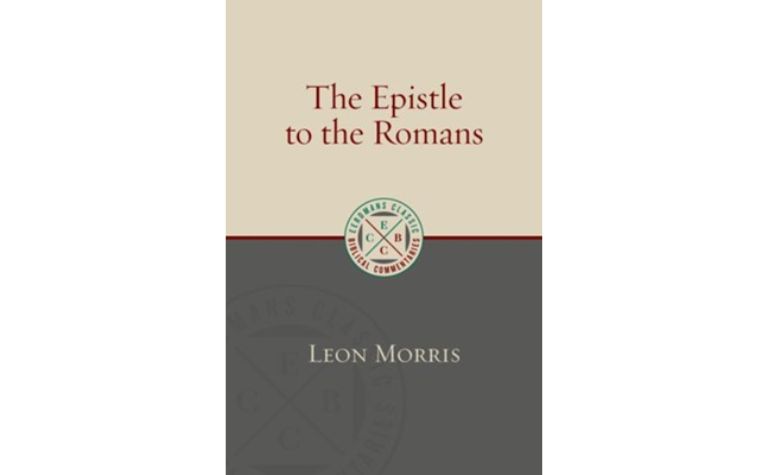
Morris was Reformed
Mathison recommends Morris’ Romans commentary, saying it’s one of the best on the epistle. Carson remarks, “its strength is the seriousness with which it takes the text.” Published in 1988, Kruse’s commentary replaced this one in the series in 2012 (see below).
7. Romans by Colin G. Kruse (PNTC)
Colin G. Kruse is a respected biblical scholar and theologian. He specializes in the study of the New Testament and has made significant contributions to the field.
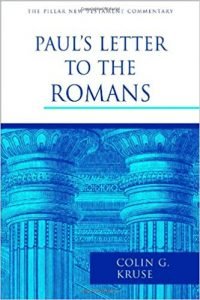
Kruse is conservative with a high view of Scripture
Kruse’s commentary is highly regarded for its scholarly excellence. Carson writes, “Kruse writes with clarity, verve, and good judgment, making this work another favorite for pastors.”
He engages with the original Greek text and provides careful exegesis of the book. His analysis incorporates linguistic and grammatical insights, historical context, and literary structure.
Kruse explores the practical implications of Paul’s teachings for Christian living, providing insights and applications that resonate with readers. This pastoral emphasis helps readers bridge the gap between theological understanding, personal faith, and discipleship.
8. Romans by Richard N. Longenecker (NIGTC)
Richard N. Longenecker is a prominent American biblical scholar and theologian. He has made significant contributions to New Testament studies, particularly in the Pauline epistles and the book of Acts.

A Romans commentary for those who know Greek
Longenecker engages with the Greek text of Romans and provides thorough exegesis, incorporating linguistic, grammatical, and syntactical analysis. His commentary is known for its careful attention to detail and engagement with the broader scholarly conversation on Romans.
Longenecker delves into the theological richness of Romans, providing thoughtful reflections and interpretations of key theological concepts.
He explores the book’s overall structure and the flow of Paul’s arguments, identifying key themes and theological concepts.
9. Romans (2 vol.) by James D.G. Dunn (WBC)
James Dunn is a highly regarded British New Testament scholar and theologian.
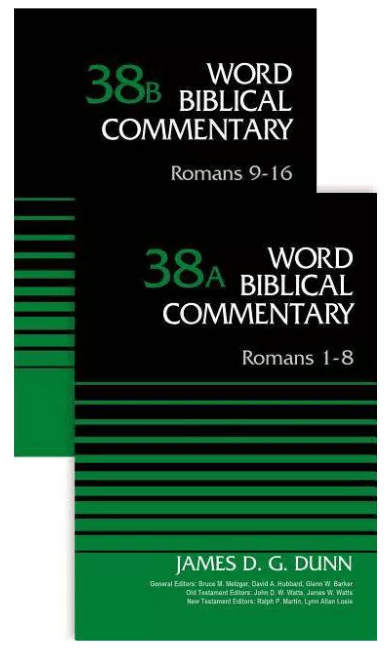
Dunn advocates for the New Perspective on Paul
Dunn’s commentary reflects his extensive knowledge and expertise in the subject matter. Readers appreciate his thorough engagement with the text, incorporating linguistic analysis, historical context, and theological insights.
Dunn is associated with the Church of Scotland and Methodism. This commentary is known, in part, for Dunn’s advocacy of The New Perspective on Paul. This distinguishes this volume from many others on this list.
10. The Epistle to the Romans (2 vol.) by C.E.B. Cranfield (ICC)
C.E.B. Cranfield (1915-2015) was a prominent British biblical scholar and theologian. He specialized in New Testament studies, particularly the Pauline epistles.

Cranfield’s commentary is technical
Bible scholar Thomas Schreiner calls Cranfield’s commentary “technical but outstanding.” Mathison says it’s “one of the most thorough commentaries on this book.” Carson suggests it “provides students with an education in grammatical exegesis.”
The green two-volume hardback edition of this commentary is technical and among the most expensive books on this list. The pink two-volume paperback edition is the abridged version and is not technical. However, even in paperback, they are still among the most costly volumes on this list.
10 More Commentaries on the Gospel of Romans
Why are the Romans commentaries below not in the “Top 10”? It’s not because they have received poor reviews or people haven’t found them helpful. The reasons vary.
Some are relatively new and haven’t been widely reviewed, read, or used. Others haven’t been broadly distributed, so getting enough information to aggregate is difficult. And others may be outdated in relation to biblical scholarship or out of print and difficult to acquire.
Romans (2 vol.) by Timothy Keller (GWFY)
Tim Keller (1950-2023) was a prominent Christian minister, author, and theologian. He is best known as the founding pastor of Redeemer Presbyterian Church in New York City, which he led for nearly three decades.

Pastor-friendly introductory commentary
In his Romans commentary, Keller thoroughly explores the key theological themes and doctrines found in the book. Many readers appreciate his fidelity to biblical truth and his ability to present complex concepts clearly and coherently.
Keller’s background as a pastor shines through in his commentary. He brings a pastoral perspective to his exegesis of Romans, emphasizing the application of the text to everyday life. This practical orientation resonates with readers seeking to understand how the truths of Romans can shape their faith and actions.
Keller is renowned for his ability to engage with contemporary culture while staying true to biblical principles. In his commentary, he addresses relevant issues and challenges faced by Christians in today’s world.
Romans by Grant Osborne (IVPNTC)
Grant R. Osborne (1942-2018) is a prominent Bible scholar. He was known for his expertise in the New Testament and served as a professor of New Testament at Trinity Evangelical Divinity School (TEDS) for many years.
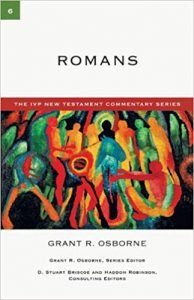
Osborne was Arminian
Osborne is recognized as a respected scholar in New Testament studies. His commentary on Romans reflects his extensive research and knowledge of the text.
Readers appreciate his careful examination of the book’s historical, cultural, and linguistic aspects, providing a solid foundation for understanding Romans.
Osborne also wrote the Matthew commentary in the ZECNT series, which is considered one of the best Matthew commentaries.
Romans by Douglas Moo (NIVAC)
Moo (see #1 above) has significantly influenced biblical studies, particularly in Pauline theology and the interpretation of the New Testament.
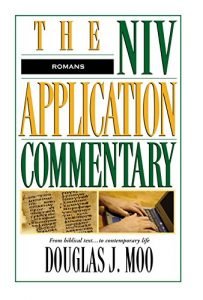
Moo’s NIVAC volume focuses on applying the text to life
See more about Moo’s commentary in the NICNT series (#1 above). The NIV Application Commentary series focuses on applying biblical texts to contemporary life. It seeks to bridge the gap between the Bible’s ancient context and its relevance to modern readers.
People appreciate this emphasis on practical application, as it helps them connect the timeless truths of Scripture to their daily lives. Each commentary in the series consists of three main components: the original meaning, bridging contexts, and contemporary significance.
Paul’s Letter to the Romans by Ben Witherington (SRC)
Ben Witherington is a prominent American biblical scholar and theologian.
Witherington is Arminian
Witherington’s commentary on Romans is known for its comprehensive approach. He is Arminian. Witherington delves into various aspects of the text, including linguistic analysis, historical context, theological themes, and literary structure.
This commentary pays close attention to the historical and cultural context of Romans. He explores the social, political, and religious context of the time, shedding light on the text’s original meaning and significance. This contextual analysis helps readers grasp the nuances of Romans and its relevance to the first-century audience.
Romans by Michael Bird (SGBC)
Michael F. Bird is a prominent Australian biblical scholar and theologian. He has made significant contributions to the field of New Testament studies, particularly in Pauline theology, the Gospels, and the New Testament’s historical context.
Pastor-friendly and Reformed
The Story of God Bible Commentary series focuses on the narrative arc and storytelling aspects of the biblical text. It seeks to uncover the overarching story of God’s redemptive work throughout Scripture.
While emphasizing the narrative, the commentary series also explores the theological dimensions of the biblical texts. It delves into the core theological themes and teachings in each book, providing readers with a deeper understanding of Scripture’s theological richness.
Romans by Charles Hodge
Charles Hodge (1797-1878) was a highly influential American biblical scholar and theologian. He is best known for his work in systematic theology and his contributions to the development of Reformed theology in the United States.
A Presbyterian classic
Mathison says Hodge’s commentary is “rich in exegetical and theological insight.” Readers who value doctrinal fidelity appreciate Hodge’s consistent engagement with key theological themes such as justification, faith, and the sovereignty of God.
Hodge’s commentary on Romans is praised for its comprehensive exegesis of the biblical text. He provides a detailed analysis of each passage, exploring the original meaning, grammar, and historical context.
Despite his reputation as a systematic theologian, Hodge brings a pastoral perspective to his commentary on Romans. He consistently seeks to apply the teachings of Romans to the practical concerns and challenges faced by believers.
Romans by F.F. Bruce (TNTC)
F.F. Bruce (1910-1990) was a highly regarded British biblical scholar and theologian. He is known for his significant contributions to the field of New Testament studies.
Considered a classic
His commentary on Romans reflects his meticulous research, deep understanding of the biblical text, and familiarity with the historical and cultural context.
Bruce delves into the historical and contextual background of Romans, providing valuable insights into the cultural and religious milieu of the time. His exploration of the historical setting of Romans helps readers grasp the text’s intended meaning.
Bruce is recognized for his commitment to the authority and inspiration of Scripture. His commentary on Romans reflects his reverence for the biblical text and his desire to faithfully understand and communicate its message.
Romans by James R. Edwards (NIBC/UBCS)
James R. Edwards is a respected American biblical scholar and theologian. He specializes in New Testament studies and has made significant contributions to the field.

Accessible and quotable
James R. Edwards is recognized for his meticulous scholarship, engagement with biblical texts, and contributions to the field of New Testament studies. His works are widely read and appreciated by scholars, pastors, and students seeking in-depth exploration of the biblical texts he focuses on.
Edwards also wrote the Mark commentary in the Pillar series, which is considered one of the best Mark commentaries.
The publisher notes that volumes in the UBCS series break down “the barriers between the ancient and modern worlds so that the power and meaning of the biblical texts become transparent to contemporary readers.”
Romans by Robert Mounce (NAC)
Robert H. Mounce (1921-2019) was a prominent American biblical scholar and theologian. He made significant contributions to New Testament studies and biblical translation.
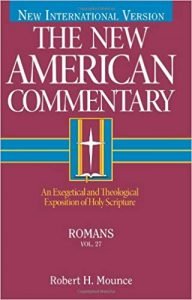
NAC reflects Baptist theology
Mounce brings a pastoral perspective to his commentary on Romans. He emphasizes the practical application of the biblical text, highlighting its relevance to the Christian life. Mounce is known for his Revelation commentary in the NICNT series, which is considered one of the best Revelation commentaries.
The publisher notes that the NAC series “has been designed primarily to enable pastors, teachers, and students to read the Bible with clarity and proclaim it with power.”
Paul’s Letter to the Romans: A Commentary by Peter Stuhlmacher (Stand Alone)
Peter Stuhlmacher (1932-2008) was a highly respected German biblical scholar and theologian. He made significant contributions to the field of New Testament studies, particularly in the areas of Pauline theology and the early Christian movement.
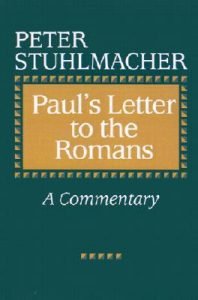
Brief, moderately critical treatment
Stuhlmacher is a respected biblical scholar with expertise in the New Testament and Pauline theology. His commentary reflects his thorough research and scholarly acumen.
Stuhlmacher engages with a wide range of scholarly perspectives on Romans. He presents different viewpoints and engages in critical dialogue with other scholars.
The publisher notes that “Stuhlmacher stresses the Old Testament and postbiblical Jewish traditions as the primary backdrop to Paul’s thought, as these traditions were known by Paul himself or mediated to him through Jesus and the early church.”
| Also see |
|---|
| See the Top 50 Bible Commentary Series |
| See the Top 25 Whole-Bible Commentaries |
| See the Study Bibles Comparison Chart (over 50) |
Related Questions
Whole-Bible commentaries help readers see how the parts of Scripture fit together. The list below ranks 25 one- and two-volume commentaries based on aggregate reviews, with options ranging from...
With so many Bible commentary series available today, many people wonder which ones are best. The variety exists because readers have different purposes for using them — some are designed for...